


In this edition of Inside Alfa, we sit down with Craig Barnes from RIF Group to talk about his journey into the world of logistics, the role of innovation in making teams work smarter, and the lasting value of strong relationships within the network.
From an unexpected start in the industry to building trusted partnerships across the globe, Craig shares why logistics is never boring, why face-to-face connections still matter, and how a single shipment can grow into long-term cooperation — and even friendship.
We’d love to hear your story – how did you get started in the logistics world, and what motivated you to stay?
Honestly? By accident.
I didn’t get the results I’d hoped for before university, so I went through clearing in the UK. That landed me in Liverpool on a Maritime Studies course — and at the time, I didn’t really know what I was walking into. As it turned out, it was a really broad course with a lot of business‑focused modules and exposure to different parts of the maritime world, including freight forwarding and logistics. By the time I finished, I came out with a rounded skill set and managed to get a job at a freight forwarder as my first role.
From there, it’s the same story you hear a lot in this industry. You either leave quite quickly, or you get bitten by the bug. I definitely got bitten. Every day was different, often chaotic, sometimes stressful — but never boring. And once you realise that the world literally doesn’t function without logistics, you start to see the industry very differently. We’re a bit unsung, but we keep everything moving.
What’s kept me here is the same thing that caught my attention at the start: every day is different, it’s unpredictable, it’s challenging, and what we do genuinely matters. We’re behind almost everything people consume every day, even if we don’t always get the recognition. Add to that the people — some real characters — and friendships that last a lifetime, and it’s hard to imagine doing anything else.
What does innovation mean to you in the context of logistics, and how do you foster it in your organization?
For me, innovation is about using the technology that’s already available to make us more efficient — not to reduce headcount. It’s about working smarter, not harder.
If technology can take away some of the manual, repetitive work, that gives our teams more time to focus on clients and partner relationships, which is where we really add value and differentiate ourselves. That’s how we look at innovation internally — practical, useful improvements that help people do their jobs better and more efficiently, not replace them.
Do you believe AI will replace certain logistics roles, or simply empower them? Why?
I don’t believe AI will ever fully replace many roles in logistics. What it will do is remove a lot of the repetitive tasks that take up time and energy but don’t necessarily add much value.
There still has to be a human overview. Accountability, judgement, common sense, and being able to explain why a decision was made — those can only be done by a human. AI can get things wrong, and someone always needs to own the outcome.
If AI helps reduce admin and repetition, it frees people up to focus on relationships, problem‑solving, and spotting opportunities — which is where the real value sits in our industry.
Is there a specific project or achievement in your career that you’re particularly proud of?
I’m proud of where I’ve ended up.
I left school not really knowing what I wanted to do, went to university without a plan, moved through different roles, and now find myself as Partnership Director. None of it was mapped out — it just evolved — and I wouldn’t change it.
I’ve also been incredibly lucky to travel through work and meet some amazing people along the way. A lot of them I now call friends. Not many jobs give you genuine friendships across the globe, and that’s something I’m really proud of.
What do you wish someone had told you before you started in logistics?
I wish someone had told me just how varied the industry is — and that you never stop learning.
No matter how long you’ve been in the industry, something new always comes along. New markets, new regulations, new challenges. If you’re open minded and adaptable, it keeps you on your toes and stops you ever getting complacent. Someone once said “if you’re the smartest person in the room, you’re in the wrong room” – that’s our industry, be prepared to learn.
Can you share a specific example of a collaboration or connection within the network that led to a successful project or partnership?
There are so many collaborations that I cannot single any partnership out. Some of the best partnerships we’ve built have come directly through the network. In many cases, it starts with a single shipment or a specific lane, and through good communication and trust, it grows into repeat business and long-term cooperation. These partnerships quickly become friendships.
Meeting people face to face and knowing who you’re dealing with makes a huge difference. We want to develop business and opportunities with like-minded partners where they are RIF Group in their territories, and we represent them as though they operate directly in ours.
What’s one thing you think makes this network different from other professional associations or logistics groups?
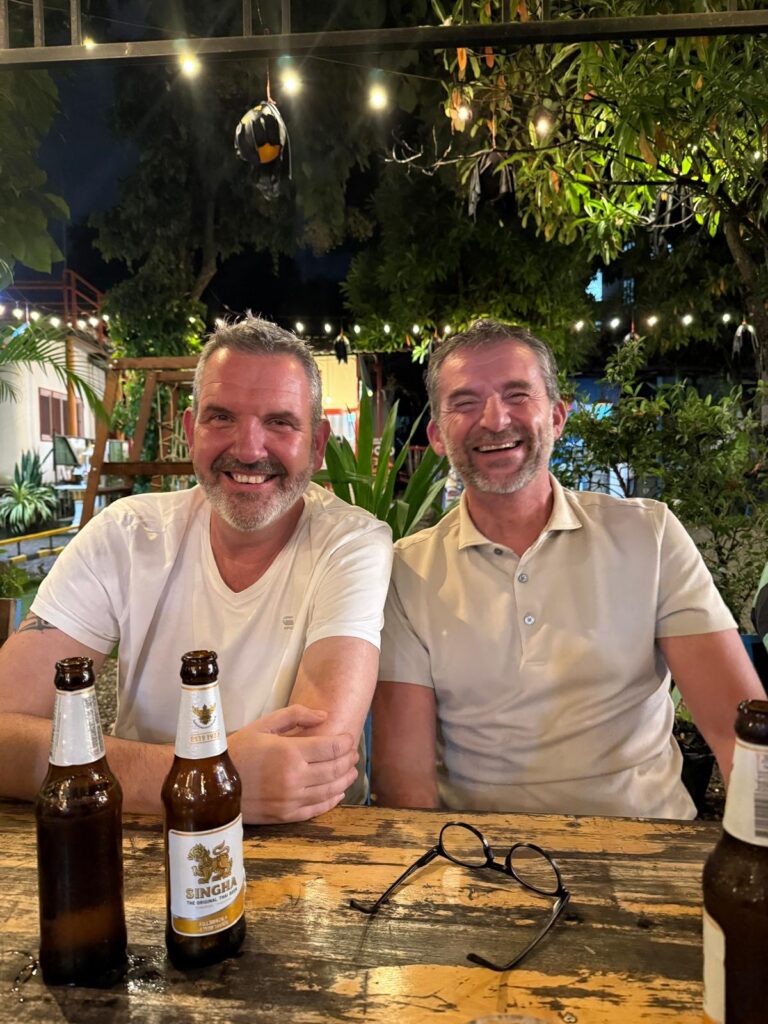
Simple – it’s the people !
You’re not just swapping business cards — you’re speaking directly to people who can actually make decisions. That leads to quicker answers, more accountability, and stronger relationships. It feels much more collaborative than transactional, which is exactly what a good network should be.
It’s not just a network you’re part of — it’s one you actually use.
What’s the funniest or strangest item you’ve ever had to transport?
Early in my career, I dealt with some shipments that required… let’s say very thorough customs checks. The company that I was with at the time had a client that imported shipments of adult products — including DVDs.
That led to a few extremely awkward moments involving inspections and paperwork where everyone was desperately trying to stay professional. It was one of those situations where nobody wanted to make eye contact — and everyone wanted it to be over as quickly as possible.
It’s a perfect example of logistics life really. You think you’ve seen it all (literally)… until the next shipment turns up.
Thank you, Craig, for sharing your story and insights with us. We truly appreciate your time and contribution to this edition of Inside Alfa and look forward to seeing RIF Group continue to build strong partnerships across the network.